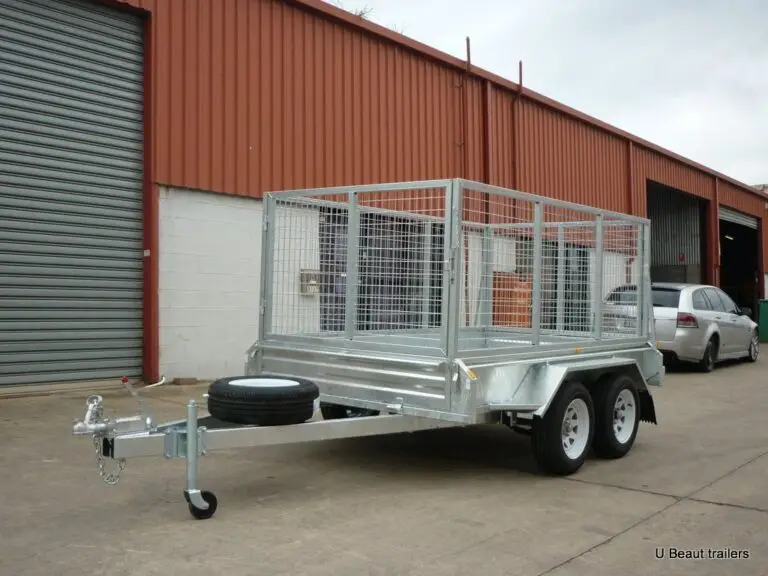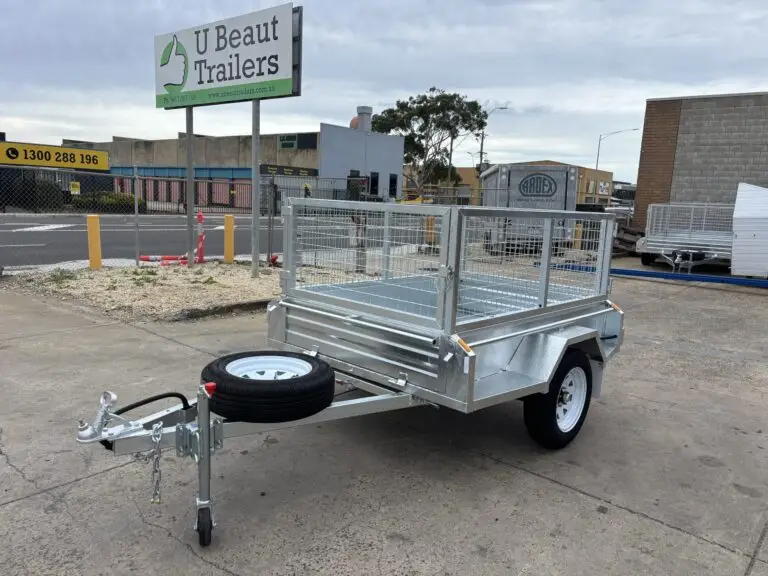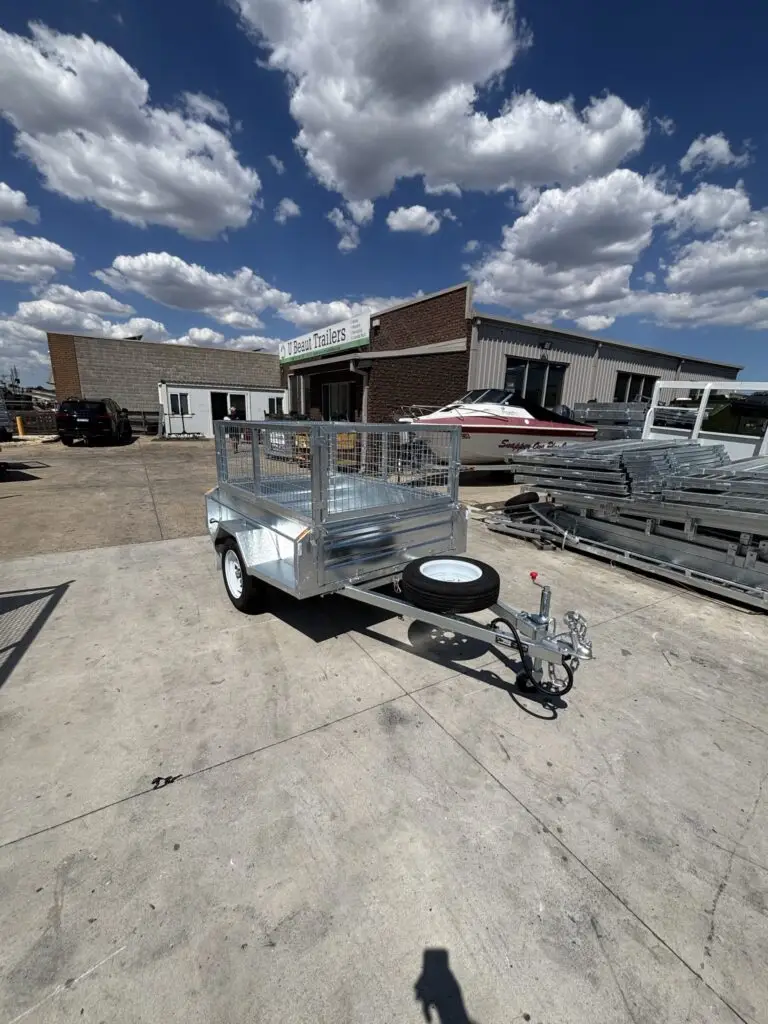
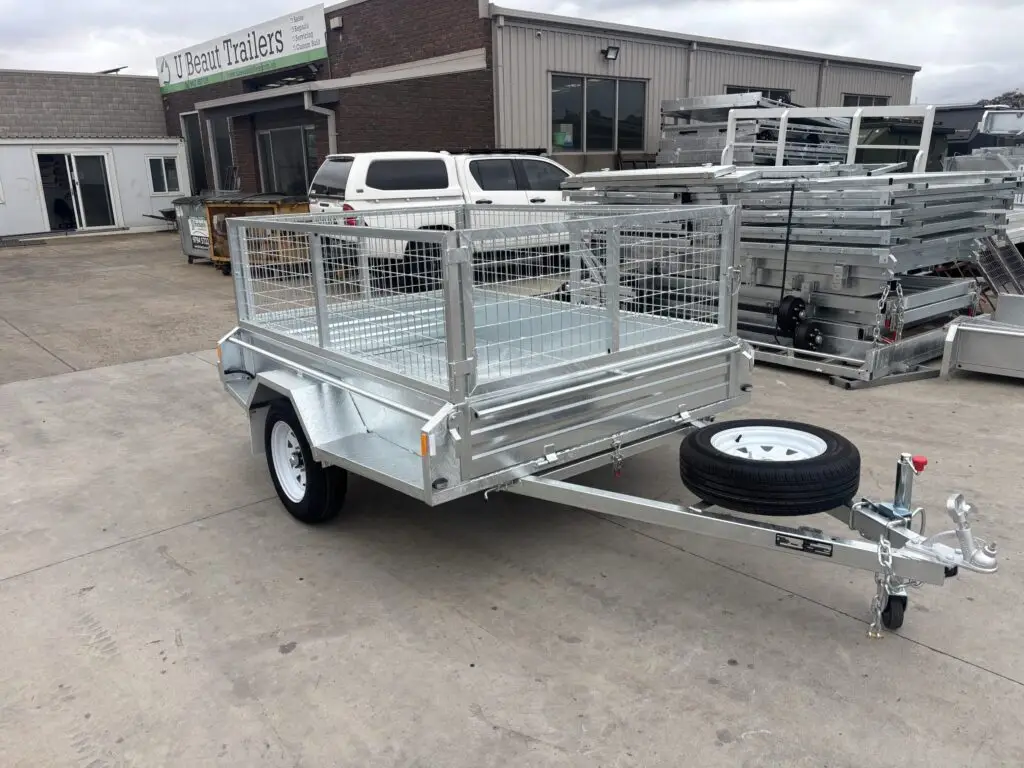
A galvanised trailer is built to last — but dirt, road salt and moisture will slowly dull the finish and, left long enough, work against the zinc coating that protects the steel underneath. The good news: keeping it clean is easy, cheap, and takes under an hour. Here’s how we recommend cleaning the trailers we build at our Seaford workshop.
Why galvanised steel needs the right kind of cleaning
Galvanised steel is coated in zinc, which sacrifices itself to protect the steel from rust. The coating is tough, but it isn’t indestructible — harsh chemicals, wire brushes and aggressive scrubbing can wear it down. Cleaning the wrong way does more harm than not cleaning at all, so gentle and regular beats hard and rare.
It matters most if your trailer lives near the coast or carries anything corrosive. Salt trapped under a layer of grime holds moisture against the surface and quietly eats at the coating. A regular rinse is genuinely a structural-maintenance job, not a cosmetic one.
What you’ll need
- A bucket of warm water with mild or pH-neutral detergent
- A soft-bristle brush or sponge
- A hose, or a pressure washer on its lowest setting
- White vinegar (for white-rust stains)
- Microfibre cloths and gloves
Avoid: steel wool, wire brushes, and strongly acidic or alkaline cleaners — all of them damage the zinc.
Step 1 — Rinse off loose dirt
Hose the whole trailer down with clean water, paying extra attention to the undercarriage, wheel arches and joints where grime builds up. Rinsing first means you won’t grind grit into the surface when you scrub.
Step 2 — Wash with mild soap
Warm water, a small amount of mild detergent, soft sponge. Work top to bottom so dirty runoff doesn’t cross clean panels. Light pressure — the goal is lifting dirt, not polishing metal.
Step 3 — Deal with white rust
The chalky white residue you sometimes see on galvanised steel is zinc oxide, or “white rust”. Mix equal parts white vinegar and water, apply with a soft cloth, leave it a few minutes, wipe gently and rinse thoroughly. Done.
Step 4 — Grease and tar spots
For stubborn grease or tar, use a mild degreaser made for metal surfaces — and check the label says it’s safe on galvanised steel before it touches the trailer. Rinse well afterwards so no residue remains.
Step 5 — Rinse and dry
Give everything a final rinse, getting into corners, bolts and seams — leftover soap or vinegar leaves streaks and dull patches. Then dry with a microfibre cloth rather than letting it air-dry: you avoid water spots, and drying by hand is the best inspection you’ll ever do, because your hands find damage your eyes miss.
Restoring the shine
Galvanised steel doesn’t take polish the way paint does. After cleaning, buff lightly with a dry microfibre cloth. Over time the coating develops a soft grey patina — that’s normal, protective, and nothing to fight. Skip waxes and sealants unless they’re specifically made for galvanised metal; the wrong product traps moisture against the coating.
Looking after the coating is the single cheapest thing you can do to extend a trailer’s life. If yours is showing damage beyond what a clean can fix — deep scratches through the zinc, rust bleeding at welds — our workshop handles trailer repairs and servicing in Seaford, and every trailer in our range ships hot-dip galvanised as standard.
Frequently asked questions
How often should I wash a galvanised trailer?
Every 4–6 weeks for normal use; monthly or after every trip if you’re near the coast, towing on salted roads, or carrying green waste or fertiliser. A quick hose-down after any salty or corrosive load is worth doing every time.
Can I use a pressure washer?
Yes — on a low-pressure setting, kept moving, at a sensible distance. High pressure held close can drive water into seams and stress the coating. If in doubt, a garden hose does the job fine.
What’s the white powdery stuff on my trailer?
White rust (zinc oxide) — it forms when fresh galvanised surfaces sit wet without airflow. It’s cosmetic in small amounts and easily removed with a 50/50 vinegar-and-water wipe, but recurring heavy white rust means the trailer is staying wet somewhere: check drainage and where it’s parked.
Should I paint or seal a galvanised trailer?
Generally no. The zinc coating IS the protection, and most paints and sealants don’t bond well to it or trap moisture underneath. If you want a painted finish, it needs the right etch-primer system — talk to us before putting anything on it.
What should I never use on galvanised steel?
Wire brushes, steel wool, angle-grinder attachments, and strong acid or caustic cleaners (including some truck washes). All of them strip zinc. If a cleaner doesn’t say it’s safe for galvanised surfaces, assume it isn’t.
Related reading: How to Maintain a Tipper Trailer for Long-Term Performance · The Truth About Cheap Tipper Trailers in Australia