Are you looking for something that can tow your tools for work, and embark on a cross-country camping trip? Or simply transport goods with ease? Owning a trailer in Australia has its own benefits.
However, buying a trailer involves more than just picking the first one you see on a sales lot. Melbourne has become a hub for both manufacturing and trailer repair services. Trailers Melbourne businesses are known for their exceptional craftsmanship and customer-focused approach they provide to you.
In this blog, we will discuss how to buy a trailer in Australia, and what are the things that you will need to consider before finalizing your trailer choice.
Understand Your Purpose:
The first thing you should know before you go to a trailer manufacturer in Melbourne to buy your first trailer is- Why do you need it?
If you can answer this question, almost half of your task is done.
Do you need a trailer for your personal use or for your business?
If it is for your business, what type of business?
- Construction business,
- Transportation business, or any other?
This will help you get the right size, structure, design, and features.
Talking about Australia, the most common purposes people use trailers here are:
- For transporting goods, which includes boxes, equipment, and tools.
- For camping and traveling purposes. Trailers are used as caravans and camper trailers.
- Moving new vehicles, like motorbikes, cars, and mini trailers.
- For hauling vehicles if you have parked them in restricted areas.
- For construction and landscaping works.
- Recreational purposes like transporting boats or bikes.
(Also Read More- Why do people prefer buying Australian made trailers?)
Types of Trailers in Australia:
Australia has a vast market where you will find a variety of trailers, with different structures for performing different tasks. Here is a list.
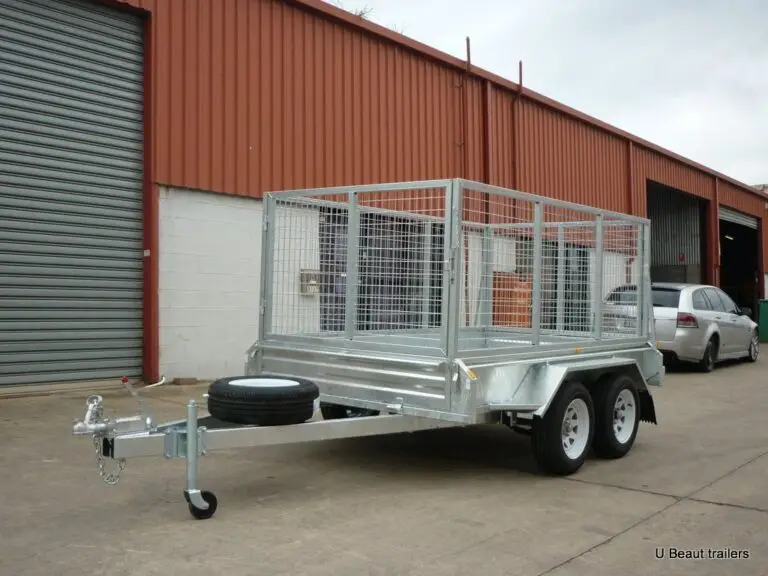
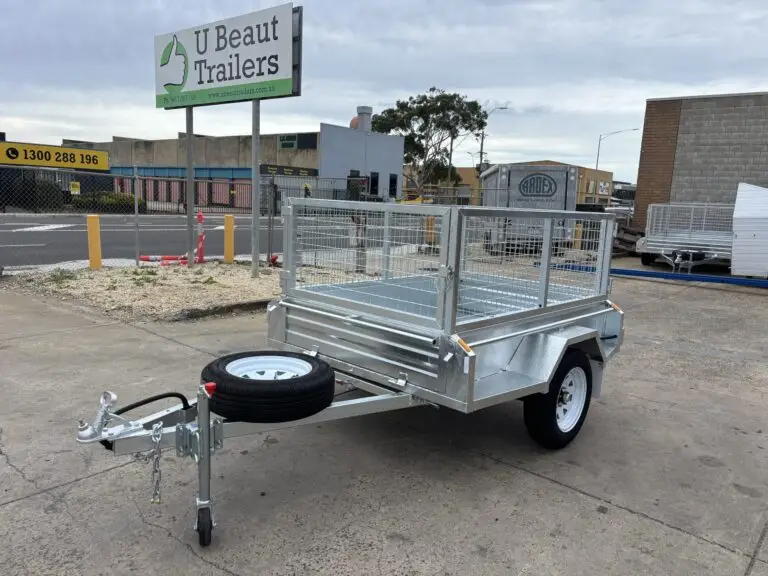
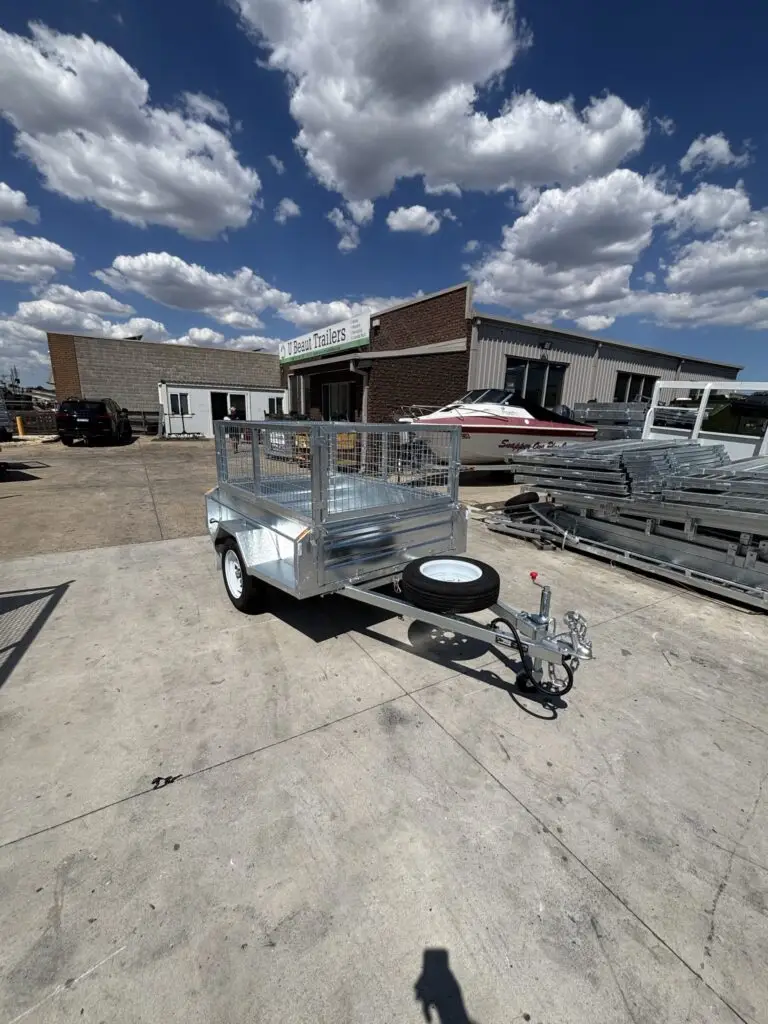
1. Box trailers: They are just boxes with wheels attached. They are an ideal choice for general-purpose hauling. Generally, box trailers come with single or tandem axle varieties and often have a cage or full steel side wall structure.
2. Car trailers: Car trailers are a trailer type mainly used for hauling cars, vehicles, and other equipment with wheels attached. Car trailers generally have a flatbed structure or a slightly tilted platform that makes it easier for vehicles to climb up the trailer.
3. Camper trailers: Camper trailers are for camping enthusiasts, who love to add memories of their travel journeys. Camper trailers come in a variety of types, they can have soft floors or hard floors, and it all depends on how you want it to be. And off-road camper trailers with a range of comfort and convenience features.
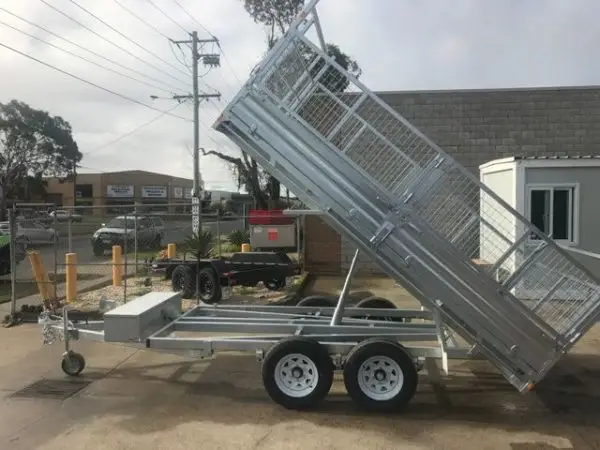
4. Tipper trailers: Tipper trailers have a benefit over other trailer types. How? The tipper trailers are equipped with hydraulic lifts to unload materials. And are quite common in the farming and construction industries.
5. Horse trailers: As the name suggests, these horse trailers are built specifically to transport horses from one place to another. They are often equipped with padded interior dividers and ventilation.
6. Custom Trailers: Custom-built trailers offer the benefit of meeting specific needs that standard trailers don’t meet. Several manufacturers offer customization services to match your precise needs.
Trailer Sizes And Weight Capacity:
Once you know why you need a trailer, the next stage is determining which trailer size, and weight capacity will work perfectly for your work.
ATM (Aggregate Trailer Mass):
Here, ATM refers to the total weight of the trailer when it is fully loaded with the cargo items. The weight capacity must match your vehicle’s towing capacity.
Tare Weight:
Tare weight refers to the weight of your trailer, the ideal weight of the trailer when the goods ain’t loaded.
Payload Capacity:
Payload capacity refers to the weight of cargo that you can safely carry on your trailer without getting into potential accidental risks. You can also say, ATM- Tare is equal to the payload capacity.
Internal dimensions:
Make sure the internal dimensions perfectly align with your purpose, and all your goods will fit into your trailer comfortably.
Axles:
Tandem axle trailers generally handle more weight and offer better stability, especially on rough terrain.
This is to ensure that your trailer remains safe during transit. It is better to consult your car’s user manual or a professional mechanic if you don’t understand and are unsure about it.
Also, consider getting a regular trailer repair of your trailer to extend its life.
New VS Used Trailers:
When buying a trailer you have two choices, one- you can buy a brand new trailer, or second buy a second-hand trailer. Each of them has its own set of pros and cons.
Pros of a brand-new trailer:
- A brand new trailer comes with a warranty, so if it gets damaged under the warranty period. No issues, you can get it repaired with no extra charges.
- There are no hidden damages you can find in a brand-new trailer model.
- You can build a custom trailer Melbourne.
- You get the latest version of the trailer model, with the latest technology, and safety standards.
Pros of a second-hand trailer:
- A second-hand trailer is much more affordable than a brand-new one.
- A second-hand trailer is immediately available in the market.
- They are perfect for short-term and lightweight uses.
However, make sure you have inspected the second-hand trailer thoroughly for any hidden faults.
And yes, don’t forget to verify the registration history and check if it has ever been in an accident.
Key features to look for in a trailer:
When you visit a trailer manufacturer in Melbourne, don’t just go for the look, or just its color. Look for the real thing- the features it has, the benefits it can provide, and other potential things.
1. Chassis quality:
Galvanized steel frames last longer and resist rust, especially in coastal areas.
2. Axles and suspensions:
The better the suspension system, the better the ride. A good suspension system helps in reducing the wear and tear on your vehicle and protects your cargo.
3. Brakes:
Brakes provide you the right safety system you need in your cargo. Choose between override brakes (mechanical), electric brakes, and hydraulic brakes based on your trailer’s ATM.
4. Tires:
Check for potential wear, load ratings, and compliance with Australian Design Rules.
5. Lighting:
LED lights are durable, energy-efficient, and comply with visibility regulations.
6. Security:
Look for trailers with strong locking mechanisms, spare wheel carriers, and anti-theft features.
Conclusion:
Choosing the right trailer needs a brief understanding of your needs. In this blog we discussed how to buy a trailer in Australia.
Investing in the right trailer not only improves your transportation efficiency but also enhances safety and reduces maintenance costs in the long run.
If you are having difficulty finding the best sellers or a perfect trailer repair service. Don’t worry we got you!
With the help of trailer manufacturers in Melbourne, you can finely build custom trailers for sale or get them repaired.