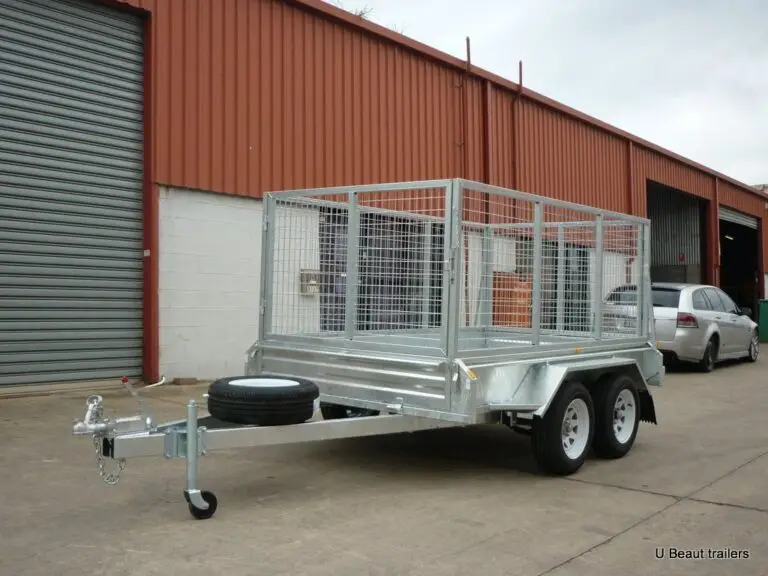
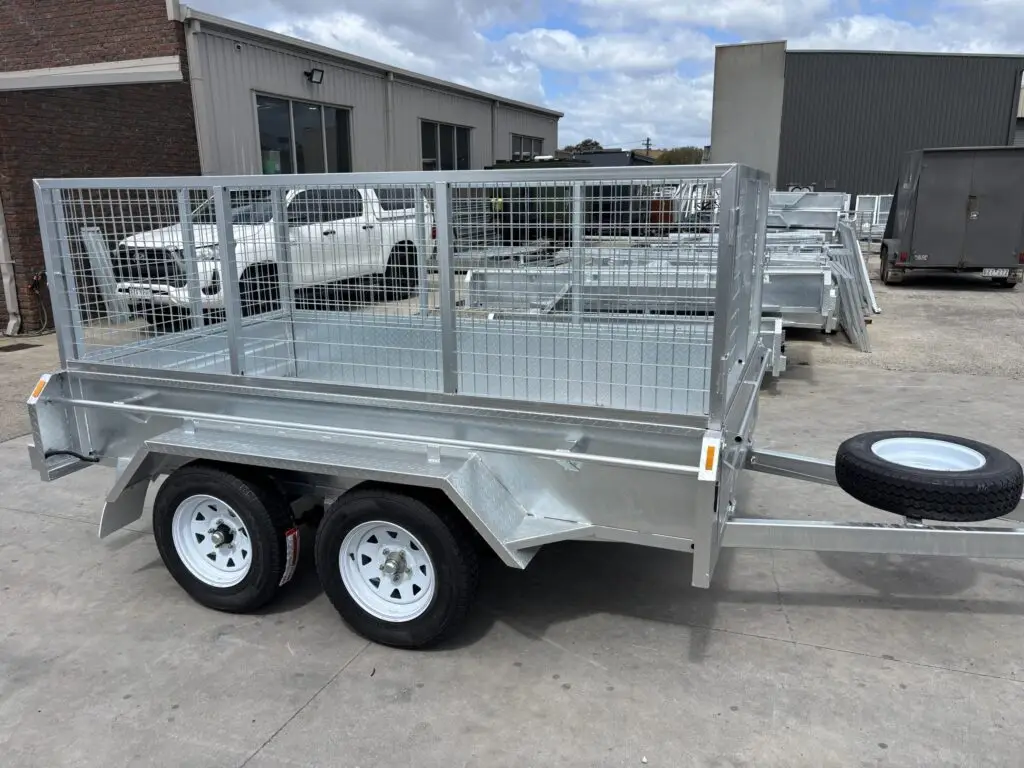
A tandem trailer has two axles instead of one. The common Australian sizes run from 8×5 (2.44m x 1.52m) up to 12×7 (3.66m x 2.13m), with ATM ratings from 2,000kg to 3,500kg. Every tandem is above the 750kg threshold, so brakes are mandatory and your tow vehicle needs a braked towing capacity to match. Here are the dimensions for each size, and how to pick between the two most popular — the 9×5 and the 12×6.
Tandem trailer sizes and dimensions
| Size (ft) | Metres | Centimetres | Typical ATM | Best suited to |
|---|---|---|---|---|
| 8×5 | 2.44 x 1.52 m | 244 x 152 cm | 2,000kg | Trades, moving house, general hauling |
| 9×5 | 2.74 x 1.52 m | 274 x 152 cm | 2,000kg | Landscaping, light construction, deliveries |
| 10×5 | 3.05 x 1.52 m | 305 x 152 cm | 2,000-2,800kg | Bulk goods, longer loads |
| 10×6 | 3.05 x 1.83 m | 305 x 183 cm | 2,000-2,800kg | Plant, equipment, wider loads |
| 12×6 | 3.66 x 1.83 m | 366 x 183 cm | 2,000-2,800kg | Machinery, pallets, bulk trade loads |
| 12×7 | 3.66 x 2.13 m | 366 x 213 cm | Up to 3,500kg | Flat top and heavy tipper builds |
Dimensions are the trailer floor. Overall length is longer once the drawbar is included. Exact ATM and tare are on the compliance plate. For single-axle sizes as well, see our full trailer sizes and dimensions chart.
What is a tandem trailer?
A tandem trailer runs two axles close together rather than one. The load spreads across four wheels instead of two, which does three useful things: it raises the legal carrying capacity, it tows far more steadily at highway speed, and it keeps going safely if one tyre fails. The trade-off is a heavier, longer trailer that costs more to buy and service, needs brakes, and takes more room to park.
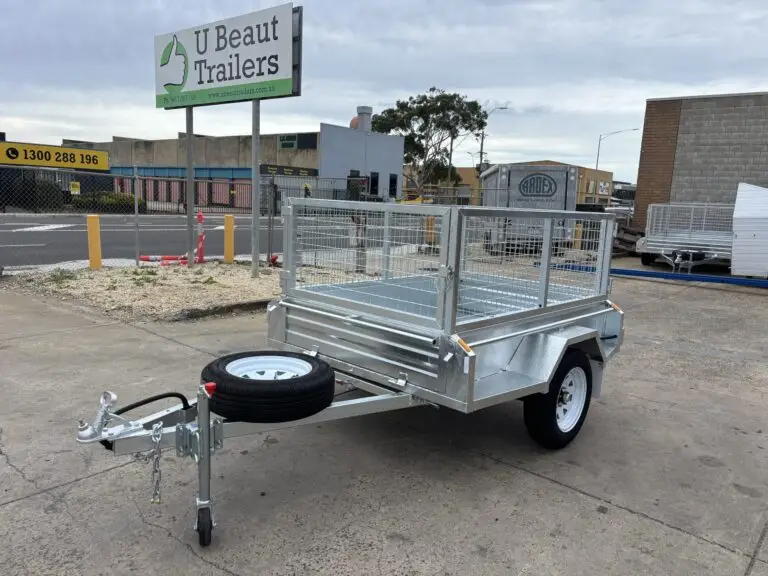
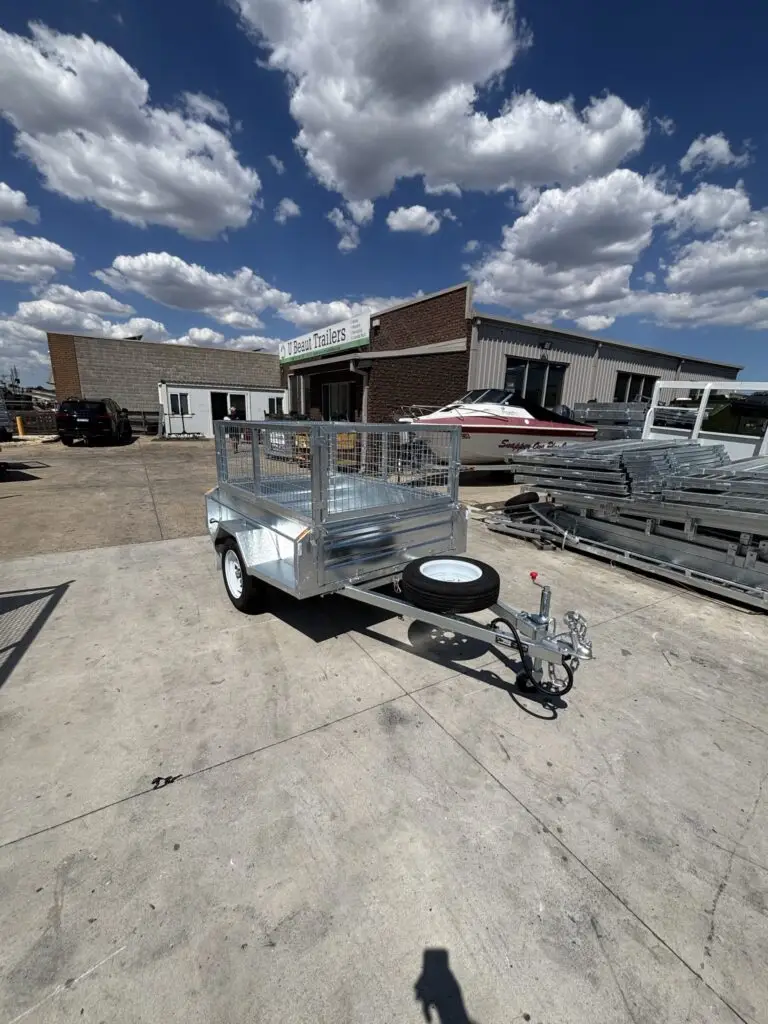
As a rule: single axle for occasional light loads, tandem once you are carrying weight regularly or travelling any distance.
9×5 or 12×6? How to choose
These are the two most common tandems, and the decision usually comes down to the shape of your loads rather than the weight.
The 9×5 (2.74m x 1.52m)
Easier to tow, park and store, and comfortable behind most mid-size utes and SUVs. It suits landscaping, light construction, garden waste, furniture and boxed deliveries. Its limitation is length — long timber, ladders or bulky machinery will overhang, and a growing business can outgrow it.
The 12×6 (3.66m x 1.83m)
Three feet longer and a foot wider, which is the difference between fitting a pallet or a mini excavator and not. It suits tradies, farmers and contractors moving building materials, ATVs, motorbikes and machinery, and it cuts the number of trips on big jobs. The trade-off is manoeuvring and storage — tight urban streets and standard garages get difficult — and it needs a stronger tow vehicle.
Short answer: if most of your loads are heavy but compact, a 9×5 is enough. If you regularly carry long or bulky items, the 12×6 saves trips and overhang problems. Buying one size up is usually cheaper than buying twice.
Capacity and your tow vehicle
ATM includes the trailer’s own weight, so your usable payload is the ATM minus the tare — explained in our guide to how much weight a trailer can carry. Because every tandem is over 750kg ATM, brakes are required; see mechanical vs electric brakes for which suits your setup.
Check your vehicle’s braked towing capacity and maximum towball download before you commit. A 12×6 loaded to 2,800kg needs considerably more vehicle than a 9×5 at 2,000kg. Load with roughly 10% of the weight on the towball and the heaviest items over the axles.
Tandem builds beyond the box trailer
Tandems are the base for most of our specialised builds — flat tops for oversized loads, plant trailers with ramps for machinery, and hydraulic tippers. The 12×6 hydraulic tandem tipper (3,500kg ATM) is a good example of how much capability a 12×6 platform can carry.
Built in Melbourne
U Beaut has been building trailers for more than 30 years from our Seaford workshop, using steel from Bluescope in Braeside and Aussie-made components wherever we can. Tandems are built to order with cages, tipper kits and ramps, and we handle repairs and servicing in-house.
Browse our tandem trailers, call (03) 9708 2691, or get in touch and we will match one to the loads you actually carry.
What is a tandem trailer?
A trailer with two axles rather than one. The load spreads across four wheels, which increases carrying capacity, improves stability at speed, and means a single tyre failure is far less dangerous.
What size is a 9×5 tandem trailer?
A 9×5 measures 2.74m x 1.52m (274cm x 152cm) on the floor — 9 feet by 5 feet — and is typically rated to 2,000kg ATM.
What are the dimensions of a 12×6 trailer?
A 12×6 measures 3.66m x 1.83m (366cm x 183cm) — 12 feet by 6 feet — with a typical ATM of 2,000-2,800kg depending on the build.
How long is a tandem trailer?
Floor lengths run from 8ft (2.44m) to 12ft (3.66m) on common tandems. Overall length is around a metre more once the drawbar is counted, which matters for parking and garage storage.
Do tandem trailers need brakes?
Yes. Australian rules require brakes above 750kg ATM, and every tandem is well above that. Your tow vehicle also needs sufficient braked towing capacity.
Is a tandem trailer better than a single axle?
For heavier or more frequent loads, yes — more capacity and much better stability at highway speed. For occasional light loads a single axle is cheaper, easier to store, and does not need brakes.
Should I buy a 9×5 or a 12×6?
Choose by load shape. Heavy but compact loads suit a 9×5, which is easier to tow and store. Long or bulky items suit a 12×6, which avoids overhang and cuts trips but needs a stronger tow vehicle and more space.