The trailer types you can tow behind a car, ute or 4WD in Australia are: box, cage, tandem box, flat top, tipper, plant, car carrier, stock and enclosed. They differ in how the load is contained, how it is unloaded, and how much weight the trailer is rated to carry. Here is what each one is, what it costs you in size and towing capacity, and which jobs it actually suits.
Trailer types at a glance
| Type | What it is | Common sizes | Typical ATM | Best for |
|---|---|---|---|---|
| Box | Flat floor with fixed sides | 6×4, 7×4, 7×5, 8×5 | 750-2,000kg | Tip runs, moving house, general use |
| Cage | Box trailer with a mesh cage on top | 6×4 to 8×5 | 750-2,000kg | Green waste, furniture, bulky light loads |
| Tandem box | Two axles, four wheels | 8×5 to 12×6 | 2,000-2,800kg | Regular heavy loads, highway towing |
| Flat top | Open deck, no sides | 10×6 to 14×7 | 2,000-3,500kg | Timber, steel, pallets, oversized loads |
| Tipper | Hydraulic ram tips the deck | 8×5 to 12×7 | 2,000-3,500kg | Soil, sand, gravel, mulch, demolition waste |
| Plant | Heavy deck with loading ramps | 10×6 to 14×7 | 2,800-4,500kg | Bobcats, excavators, mowers, machinery |
| Car carrier | Long low deck with ramps and tie-downs | 14×6 to 16×6 | 2,000-3,500kg | Cars, race and project vehicles |
| Stock | Ventilated crate with gates | 10×5 to 12×8 | 2,000-3,500kg | Cattle, sheep, horses, farm work |
| Enclosed | Fully closed, lockable body | 8×5 to 12×6 | 2,000-3,500kg | Tools, stock, anything weather or theft sensitive |
Sizes are given in feet, the way trailers are sold in Australia. For the same sizes in metres and centimetres, see our trailer sizes and dimensions chart.
Box trailers
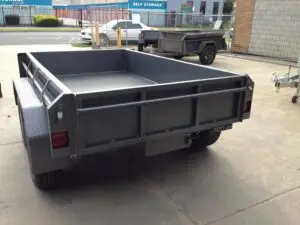
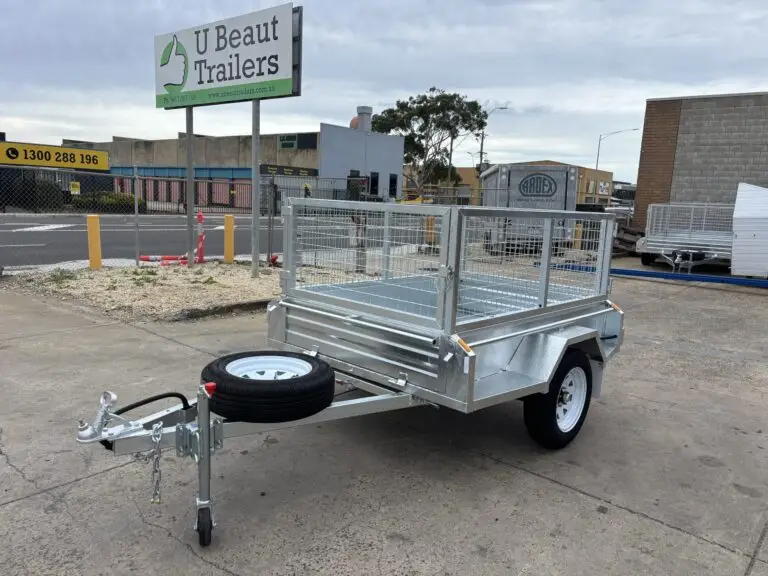
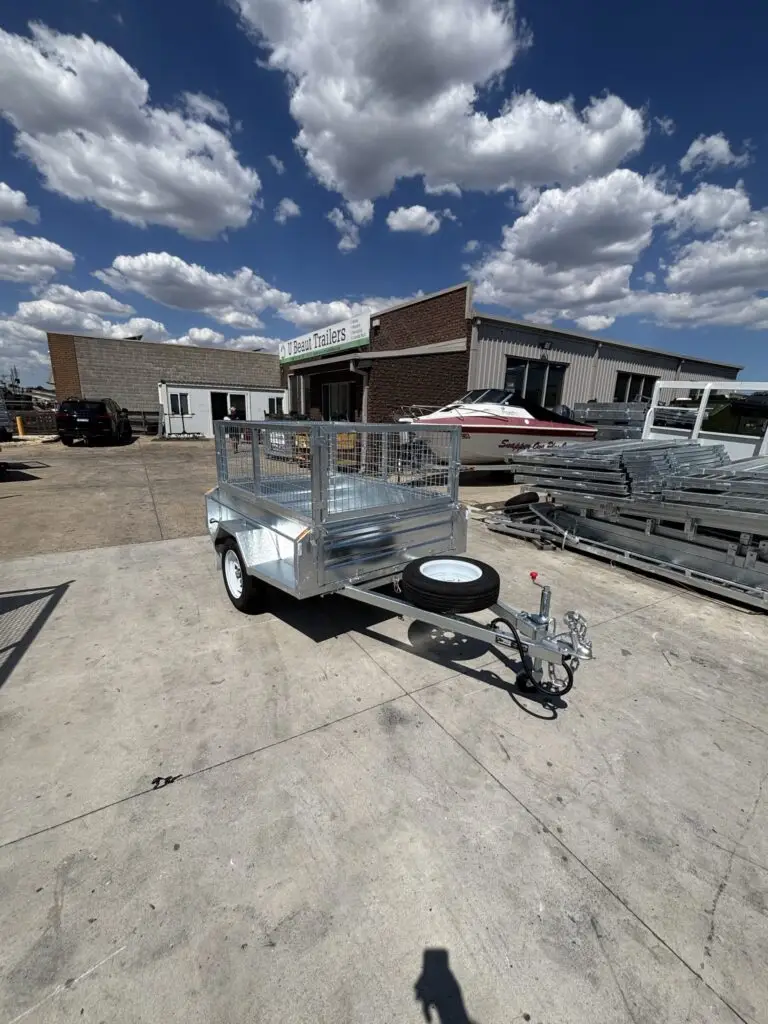
The default Australian trailer: a flat checker-plate floor with fixed sides, usually 300mm to 400mm high. A 6×4 at 750kg ATM is the classic unbraked tip-run trailer; a 8×5 gives you a lot more floor for not much more money. Our 8×5 braked single axle runs a 400kg tare against a 1,500kg ATM, so you get about 1,100kg of usable payload on one axle.
Box trailers suit anyone who occasionally shifts furniture, garden waste, building materials or household junk. Their limit is height: once the load is above the sides, you are strapping and hoping.
Cage trailers
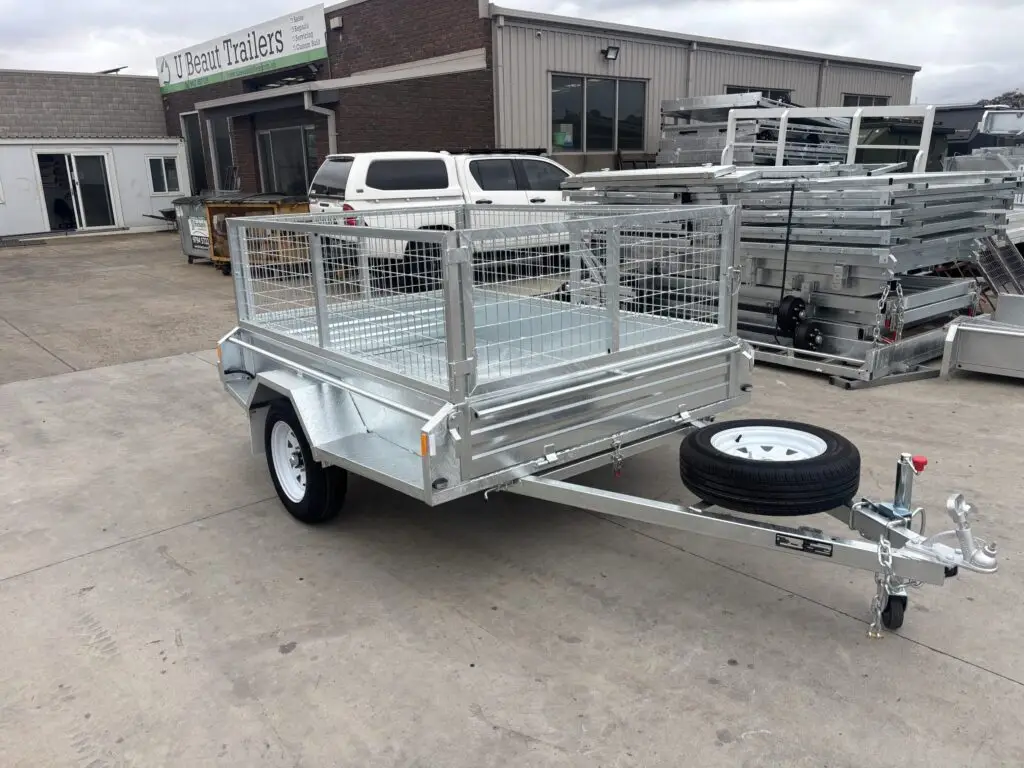
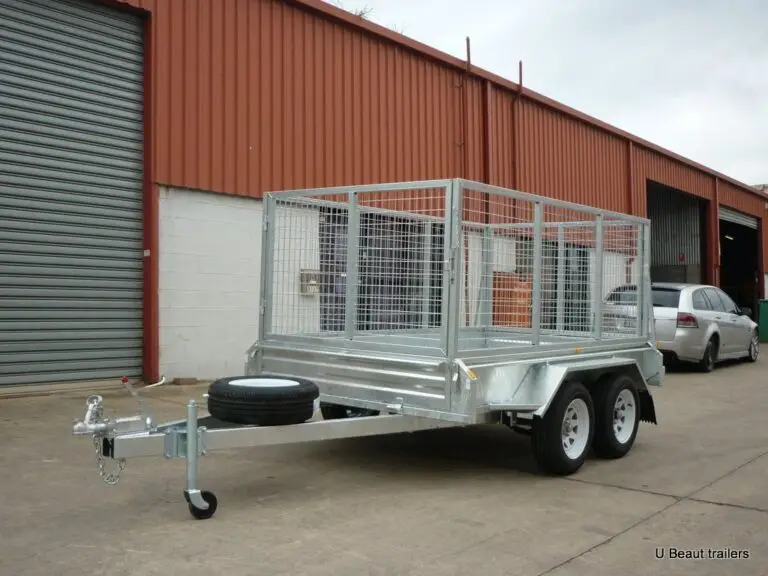
A box trailer with a mesh cage bolted or welded on top, usually 600mm to 1,000mm high. The cage does not raise the weight limit, it raises the volume limit, which is exactly what you need for prunings, mulch, boxes and furniture.
Most cages come off in sections, so you keep the flat trailer when you need it. Removable cages are standard on most of our single axle and tandem builds.
Tandem trailers
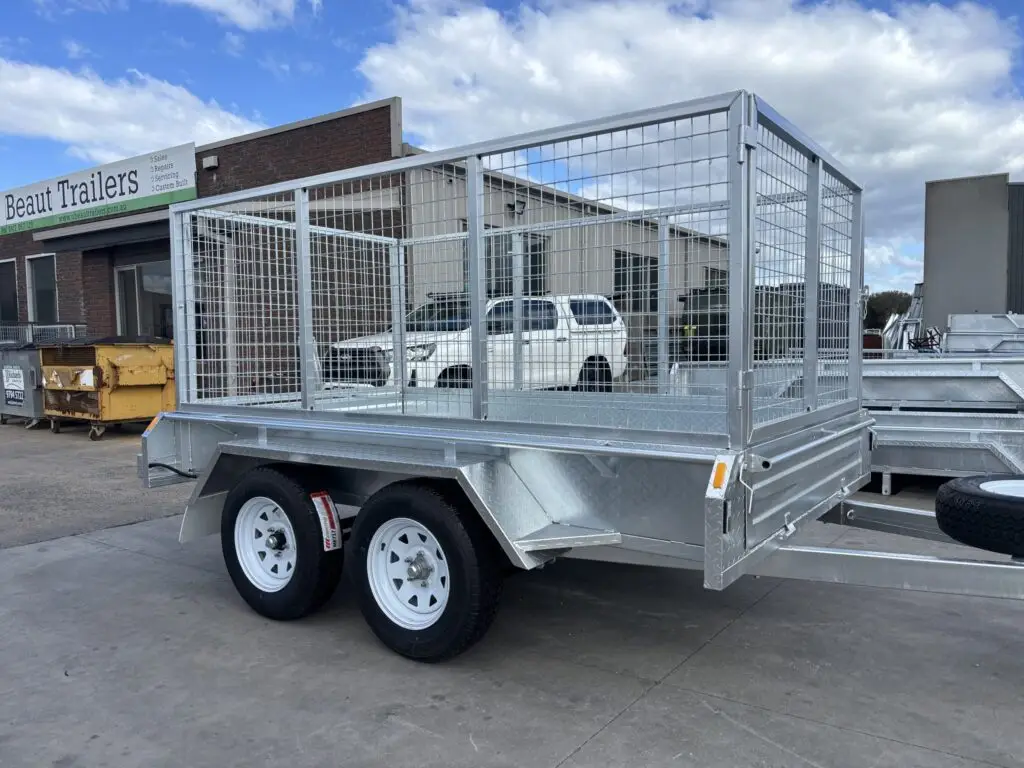
Two axles instead of one. The load spreads over four wheels, which raises capacity, steadies the trailer at highway speed, and means a blown tyre is an inconvenience rather than an emergency.
Every tandem is over the 750kg threshold, so brakes are mandatory. Full breakdown in our guide to tandem trailer sizes and dimensions.
Flat top trailers
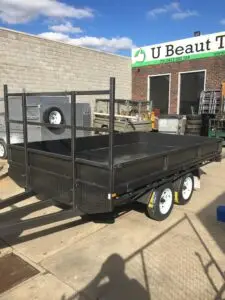
An open deck with no sides, so you can load from any direction and let long or awkward items overhang. Flat tops are the trade choice for timber, steel, roof trusses, pallets and anything a forklift needs to reach.
Some are built with fold-down sides so they work both ways — our 12×7 flat top carries a 3,500kg ATM against a 900kg tare, with split fold-down 300mm sides. The trade-off is that nothing is contained: every load needs proper strapping.
Tipper trailers
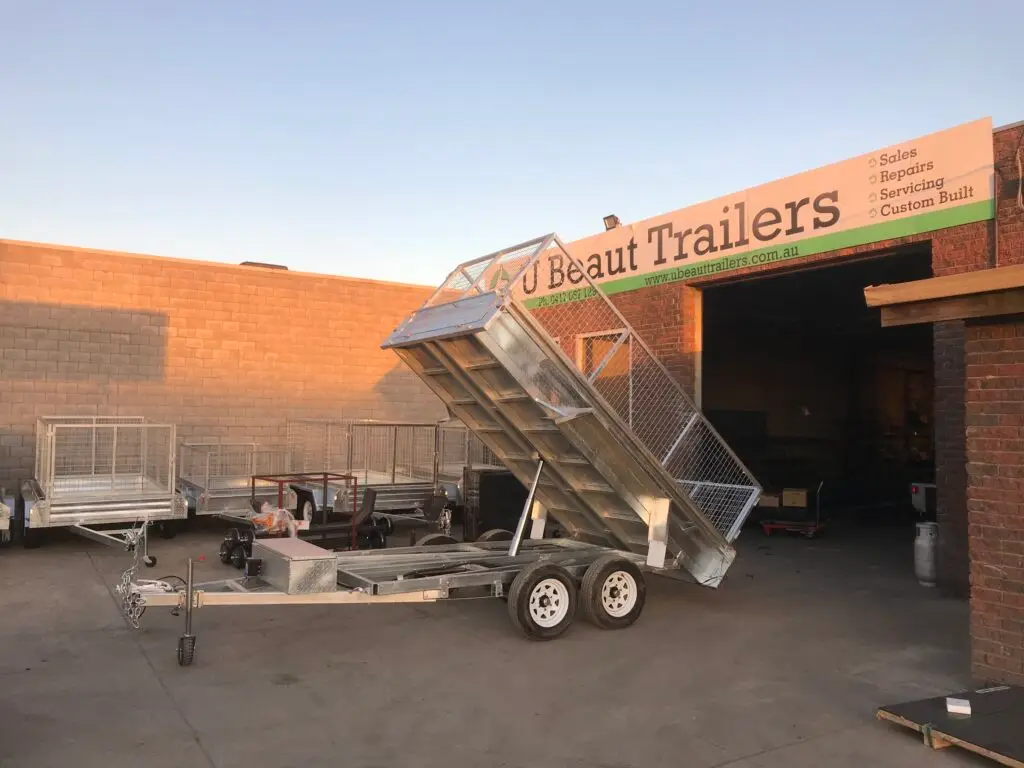
A hydraulic ram lifts the front of the deck so the load slides out. If you move soil, sand, gravel, mulch or demolition waste regularly, a tipper pays for itself in shovelling you never do.
Ours are built on tandem chassis — the 12×6 hydraulic tandem tipper carries a 3,500kg ATM against a 1,500kg tare, with 400mm sides and an 800mm cage.
Plant trailers
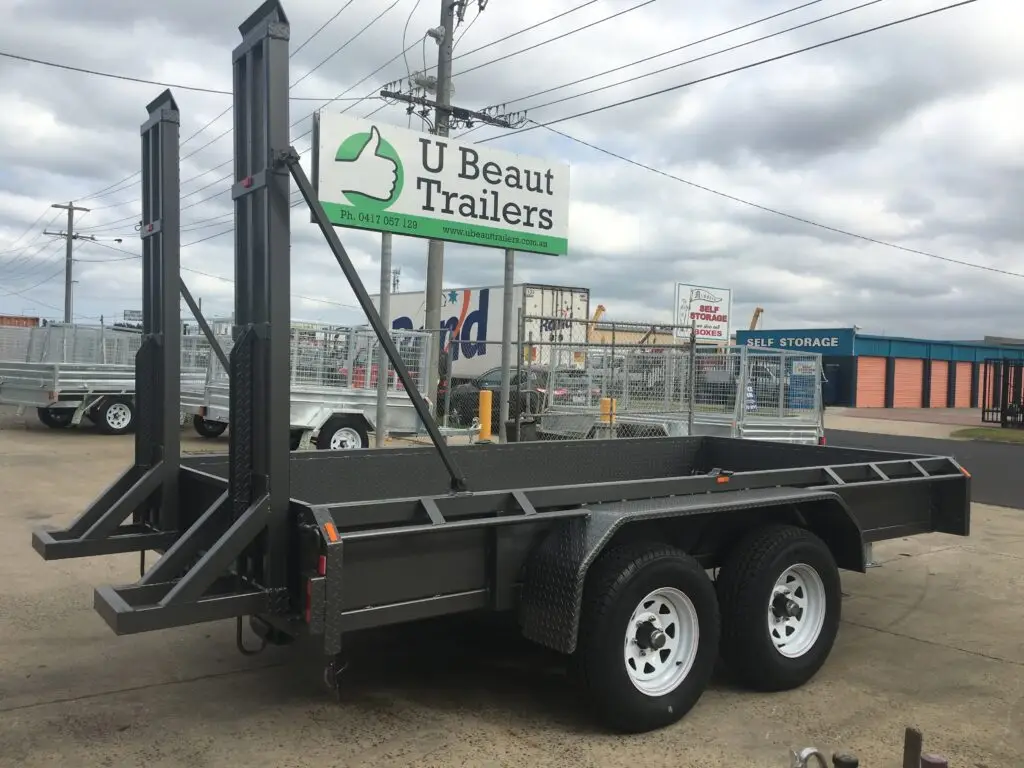
Built to carry machinery: a heavier chassis, a lower deck and ramps rated to take a bobcat, mini excavator, scissor lift or ride-on mower up under its own power.
Plant trailers are about the ramps and the tie-down points as much as the ATM — check both against the machine you actually own, including attachments. Our 12×6 plant trailer runs a 4,500kg ATM on 65mm solid Australian axles, with spring-assisted fold-down ramps and floor noggins set to your wheel track.
Car trailers
A long, low deck with ramps, a winch post and multiple tie-down points, sized so a sedan or 4WD sits between the guards. Car carriers are used for race and project cars, dealer transfers and interstate moves. Watch the combined weight: a 1,600kg car on a 700kg trailer is 2,300kg before you add anything else.
We build these to order rather than off the shelf, so the deck length, ramp type and winch mounting get matched to the vehicle you are actually carrying. Call us with the make and model and we will spec it.
Stock trailers
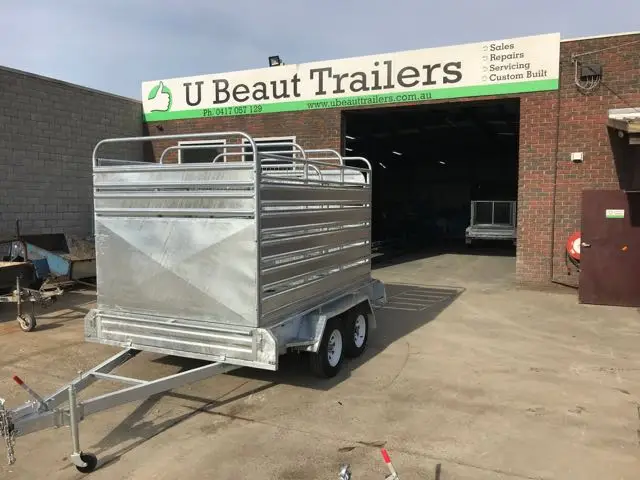
A ventilated crate with internal gates and a non-slip floor for moving livestock. Stock trailers are judged on airflow, gate layout and how easily they hose out, because animal welfare and cleaning time matter more here than raw capacity.
Ours are hot dipped galvanised right through the crate, with a three-way rear door and a centre gate so you can split a load.
Enclosed trailers
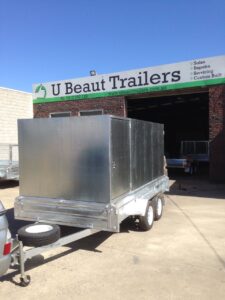
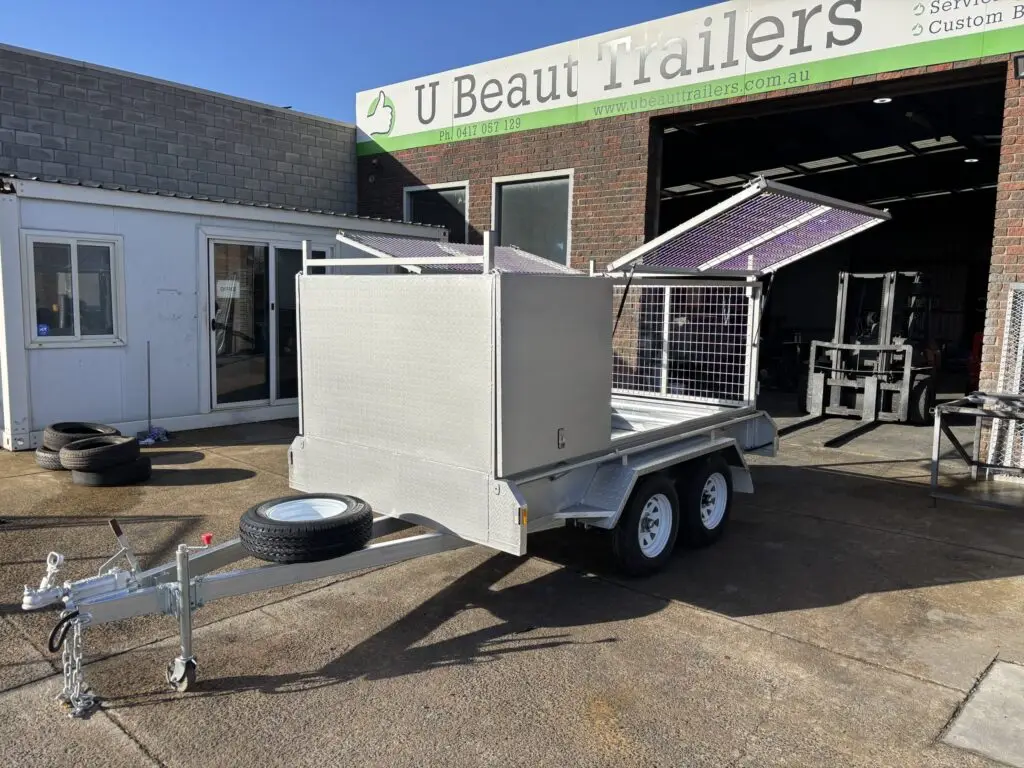
A fully closed, lockable body that keeps tools, stock and equipment dry and out of sight — which is why tradies, market stallholders and mobile businesses use them. They are heavier and catch more wind than an open trailer of the same size, so the payload is lower for the same ATM.
Like car carriers, we build enclosed and part-enclosed trailers as custom orders — shelving, compressor boxes, internal lighting and door layout all get set up around the trade. The closest thing off the shelf is our 8×5 tandem tradesman trailer, with a 1,200mm lockable top, internal shelf and flush rubber-sealed locks.
Single axle or tandem?
Cutting across all of these is the axle question. A single axle trailer is lighter, cheaper, easier to park and, under 750kg ATM, does not need brakes. A tandem carries more, tows more steadily and always needs brakes. The honest test is frequency: occasional light loads suit a single axle, regular or heavy work suits a tandem. Our guide to how much weight a 6×4 trailer can carry shows how the numbers work, and mechanical vs electric brakes covers what happens once you cross 750kg.
How to pick the right type
Work through it in this order and the answer usually falls out:
1. What is the heaviest load you will carry? That sets the ATM, and the ATM has to sit under your vehicle’s braked or unbraked towing capacity. 2. What shape is it? Long and flat means flat top; loose and bulky means cage; heavy and wheeled means plant. 3. How do you unload it? If the answer is a shovel, you want a tipper. 4. Does it need protecting? Tools and stock mean enclosed. 5. How often? Weekly use justifies a tandem and a heavier build; twice a year does not.
If nothing off the shelf fits, we also do custom builds — length, sides, cages, ramps, toolboxes and tie-down layouts to suit the job.
Built in Melbourne
U Beaut has been building trailers for more than 30 years from our Seaford workshop, using Bluescope steel from Braeside and Australian-made components wherever we can. Every trailer is hot dipped galvanised, fully welded and complies with the Australian Design Rules, and we handle repairs and servicing in-house.
Not sure which type suits your work? Call (03) 9708 2691 or get in touch and tell us what you need to carry — we will point you at the right one.
What are the main types of trailers?
For towing behind a car, ute or 4WD in Australia the main types are box, cage, tandem box, flat top, tipper, plant, car carrier, stock and enclosed trailers. They differ in how the load is contained and unloaded, and in how much weight they are rated to carry.
What is the most common trailer type in Australia?
The single axle box trailer, usually a 6×4 or 7×5 with a removable cage. It sits under the 750kg ATM limit so it does not need brakes, fits in a standard garage, and handles tip runs, garden waste and moving furniture.
What is the difference between a box trailer and a cage trailer?
A cage trailer is a box trailer with a mesh cage added on top. The cage adds carrying volume, not weight capacity — useful for prunings, boxes and furniture. Most cages are removable, so you keep the plain box trailer when you need it.
What is the difference between a flat top and a tipper trailer?
A flat top is an open deck with no sides, for long or oversized loads that need loading from the side. A tipper has a hydraulic ram that lifts the deck to unload loose material like soil, sand or mulch. Some builds combine both.
Which trailer type do I need for a bobcat or excavator?
A plant trailer — a heavy chassis with a low deck and rated loading ramps. Check the trailer’s ATM against the machine’s weight including attachments, and check the ramp rating, not just the trailer rating.
Do all trailer types need brakes?
No. Brakes are required in Australia once the trailer is over 750kg ATM. That covers every tandem and most larger single axle trailers, but not a standard 6×4 or 7×5 box trailer.
Which trailer type is best for a tradesman?
It depends on the trade. Builders and landscapers usually want a tandem tipper or flat top; electricians, plumbers and mobile mechanics usually want an enclosed or tradesman trailer with lockable storage and a shelved fit-out.