
Strong crosswinds on the highway, combined with the wind pressure exerted on the trailer while driving at high speeds, can cause the trailer to sway. Drivers often load the majority of their cargo into the rear section of the trailer; consequently, while hauling heavy loads on the highway. As a result, the weight in the rear of the trailer exerts significant force on the towing vehicle. This causes the vehicle to oscillate from side to side, rendering it unstable. Plus, heavy wind pressure increases this issue even more.
This often causes Trailer instability that can result in substantial financial losses. To stabilize a trailer, you must first identify the underlying cause of the swaying.
By employing proper techniques and adopting balanced cargo-loading methods, you can prevent your trailer from swaying. In this blog, we will discuss the complete process for preventing trailer instability while transporting heavy loads on the highway.
How to Prevent Trailer Sway While Towing Heavy Loads on Highways?
The most difficult aspect of towing a trailer with a heavy load occurs when drivers face the risk of their trailer swaying. Drivers who lose control of their vehicles create dangerous conditions that lead to potential major crashes. Drivers need to buy a strong trailer which will not stop trailer sway from occurring.
Here are some of the best lawn mower trailer designs for easy loading and distribution:
1. Ensure Proper Weight Distribution:
The first step for proper weight distribution requires 60% of the total weight to be positioned at the front section of the trailer near the axle. The next step requires you to distribute cargo weight between the left and right sides of the trailer.
The proper method for equipment distribution requires you to spread heavy items across both ends of the trailer load space. You may choose to utilize cargo trailer tie-down straps for this task because they secure cargo while keeping your equipment secured throughout the entire trailer trip.
2. Use a Weight Distribution Hitch:
A weight distribution hitch preserves trailer levelness while distributing load weight between both vehicle axles. This prevents the trailer from swaying. The trailer maintains its stability because modern hitches include built-in sway control features. Heavy duty off road box trailer come with a strong steel frame and high clearance suspension in which you can use the hitch and distribute load.
3. Inspect Tires Before Traveling:
Under-inflated or mismatched tires represent one of the main causes which lead to trailer sway. The trailer and towing vehicle tire pressure needs to be checked before you start your journey. The Tire Pressure Monitoring System (TPMS) system represents a recommended safety feature which protects against trailer sway during highway towing of heavy loads.
Read More – 10×7 Flat top Tandem Tipper with 300mm fold down side, 600mm cage, Ramps 3500kg ATM 3.5 Ton
4. Choose the Right Trailer Design:
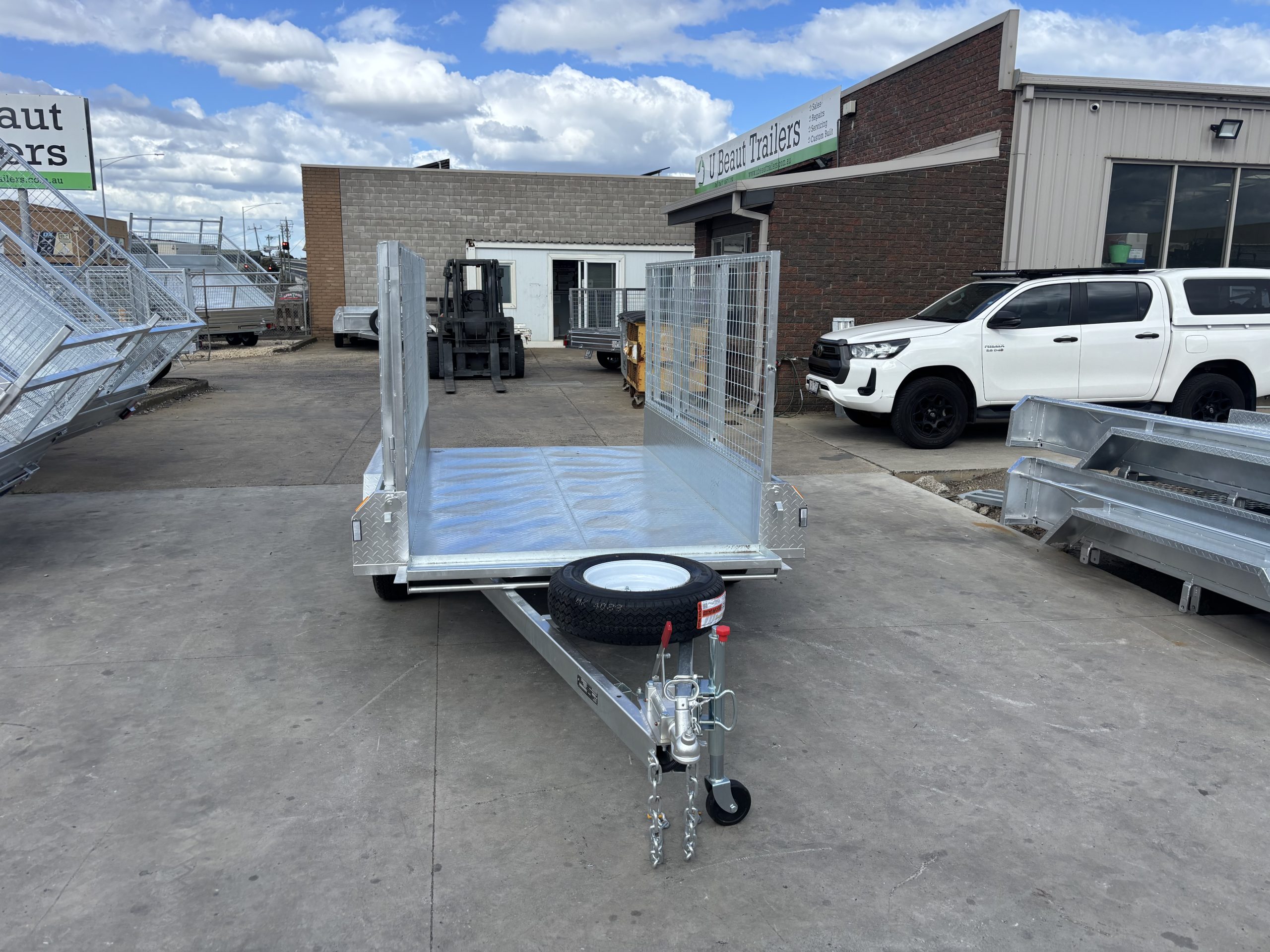
Trailer design protects against sway by controlling vehicle movements. For transporting smaller equipment, opt for trailers featuring a low deck and ramps. The loading procedure becomes safer through the combination of a wide platform and anti-slip surface. Proper loading techniques ensure that the trailer does not sway.
U Beaut Trailers is known for its premium steel construction and durable design.
5. Focus on Speed Control and Smooth Driving:
Speed Control and Smooth Driving Routines Should Become Your Main Driving Techniques. The highway requires drivers to maintain safe moderate speed while they tow their trailer. Excessive driving speeds create dangerous conditions which lead to increased trailer sway movement. The driver must control their speed while using direct movements to operate their vehicle.
6. Never Overload the Trailer:
The trailer weight limit must not be exceeded at any time. Your trailer will become unsteady because the weight exceeds its design capacity. So, check your vehicle’s Gross Vehicle Weight Rating (GVWR) first before proceeding to load your vehicle. These limits stop unnecessary weight from damaging the hitch and suspension system, securing the extended period of usage.
7. Add Trailer Sway Bars:
The installation of trailer sway bars should be performed. The vehicle experiences greater instability during travel because strong winds and uneven roads create unsafe driving conditions. Trailer sway control stabilizer bars provide an affordable solution which requires minimal effort for both installation and maintenance tasks.
8. Focus on Reliable Brands and Quality:
Your buying decisions should start with established brands which offer dependable trailer products. The process guarantees that you will obtain trailers which meet your quality requirements.
The initial payment might exceed your budget but you will receive a safe durable trailer. Trustworthy trailer manufacturers provide you with durable equipment. Reliable brands offer trailers featuring superior frames and balanced designs which effectively minimize sway.
9. Perform Regular Maintenance and Inspections:
The process of conducting regular maintenance and inspections on your trailer protects its safety while extending its operational lifespan. Routine inspections helps you check the hitch connection, the brake lights, and safety chains plus the coupling mechanisms, lubrication system and the rust protection system.
This serves as essential elements for preserving the trailer’s equilibrium.
Also Read About – 12×7 Flat Top Tandem Trailer 3500kg ATM 3.5 Ton
Trailer Setup and Equipment You Must Know About:
The section focuses on establishing trailer equipment through its setup process.
1. Weight Distribution Hitch:
The hitch system distributes trailer weight from its rear axle to the front axle which maintains both trailer and tow vehicle balance. This system enables better steering control while reducing the chance of the trailer swaying away from its intended path.
2. Anti-Sway Devices:
The anti-sway bars together with the sway control systems stop trailer swaying because they create a pulling force which keeps the trailer in position. Modern electronic sway control systems use sensors to trigger trailer brakes which help maintain directional control.
3. Trailer Suspension and Tires:
Proper suspension tuning enables the trailer system to handle vibrations from bumpy roads without experiencing sway movement. The tire pressure must be checked according to the manufacturer specifications.
General Towing Tips for Trailer Owners:
Here are some general towing tips that will help you to prevent heavy duty 6×4 trailer sway while towing heavy loads-
1. Maintain a Normal Vehicle Speed:
Towing a trailer on a highway requires drivers to operate their vehicle at a higher weight and size capacity. Therefore drivers need to keep their vehicle speed at normal driving levels to stop swaying from happening. This method gives you complete driving control over your vehicle.
2. Avoid Continuous Braking:
Continuous braking during your trip while driving up a hill leads to trailer swaying behavior. Therefore drivers need to decrease their vehicle speed while stopping brake usage throughout their entire journey. The system enables you to operate your engine and transmission functions for speed management purposes.
3. Smooth Steering and Braking:
Trailer sway begins when drivers make sudden steering moves or when they apply hard brake pressure while driving. The driver needs to handle the steering wheel in a controlled manner which requires them to operate it at a slow speed.
4. Shift into a Lower Gear:
Drivers should use lower gear when they drive through hilly regions or vehicles must climb upward. The driver should activate hazard flashers when their speed reaches a low point and they need to monitor engine temperature using the temperature gauge.
( 12×6 Tandem Stock Cattle Crate Trailer Galvanised 2800kg ATM )
Conclusion:
Trailer sway transforms an enjoyable road trip experience into a stressful situation which can destroy your entire trip. Sway typically occurs during travel due to strong winds and poor road conditions and overloading because this instability creates dangerous situations which can develop into threats.
Trailer sway prevention during heavy load towing on highways requires the implementation of correct loading practices together with appropriate safety measures. The trailer loading process requires proper weight distribution together with the use of hitches and trailer sway bars. However, you must avoid excessive loads and only purchase trailers for sale Melbourne from trustworthy brands and follow a consistent maintenance routine.
Also Read More – Guide to Understanding Trailer Sizes and Their Uses
How to Clean a Galvanised Trailer to Make it Shine?
Buying A Hydraulic Tipper Trailer: What You Need To Know